I represent a U.S. or allied defense organization.
You have a capability gap and need serious technologies assessed for mission fit, demonstration readiness, manufacturing feasibility, supply-chain trust, and sustainment.
For Defense Partners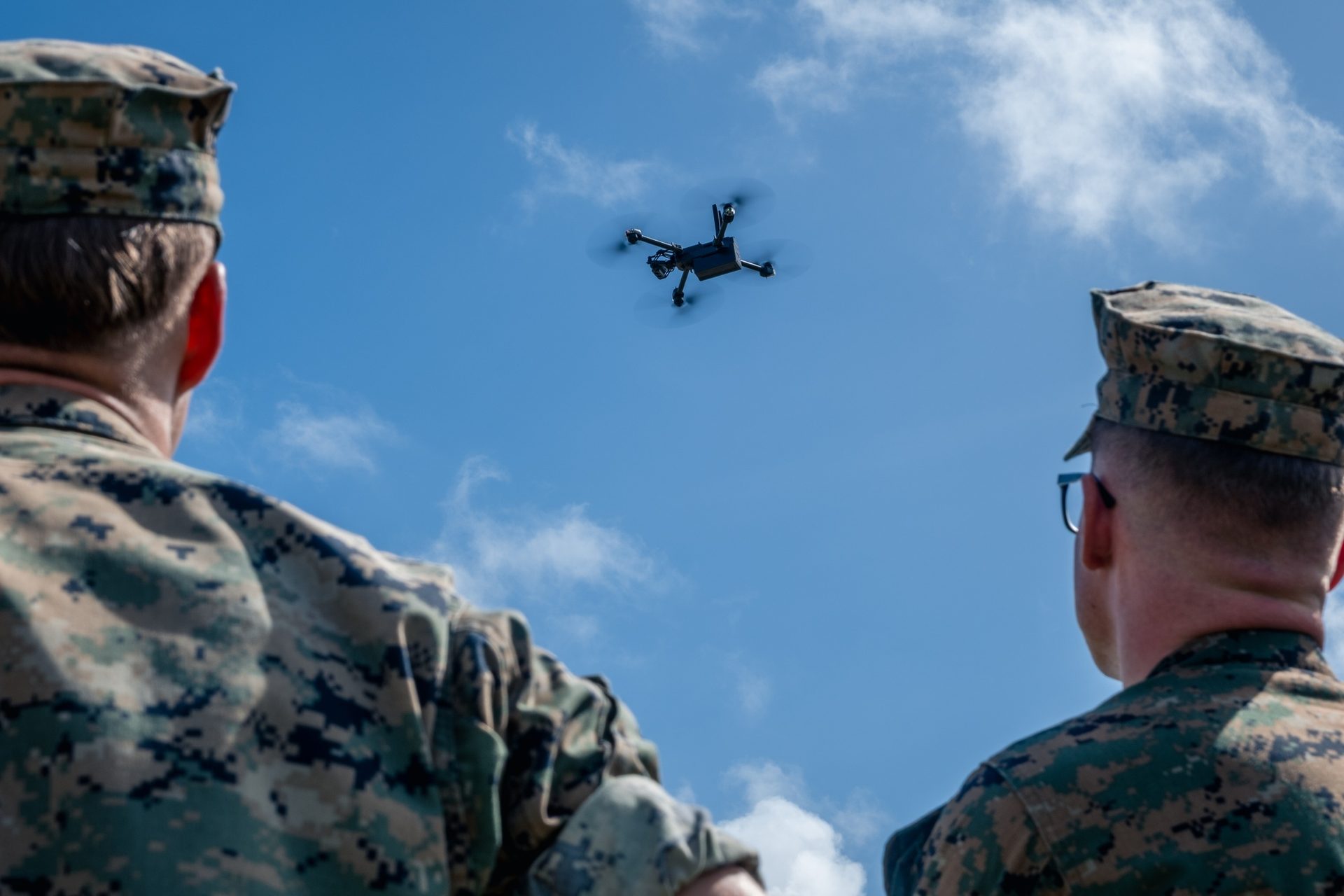
We help defense customers evaluate, test, manufacture, and sustain allied-origin technologies that solve urgent operational gaps.
Battlefield-proven. Originator-protected. Allied-scaled.
Fast enough for wartime needs; disciplined enough for U.S. transition.
Every claim links to the public record behind it.
Helicon serves different audiences with one disciplined purpose: moving serious allied-origin defense capability toward protected evaluation, trusted manufacturing, and responsible transition.
You have a capability gap and need serious technologies assessed for mission fit, demonstration readiness, manufacturing feasibility, supply-chain trust, and sustainment.
For Defense PartnersYou have operational validation and need a protected path into U.S. and allied markets without giving away control, IP, attribution, or founder value.
For InnovatorsYou can help qualified technology become trusted, manufacturable, compliant, scalable, and supportable.
Manufacturing & IntegrationYou are an investor, policymaker, journalist, advisor, or interested citizen who wants plain-English context before deciding how to engage.
Open the Field GuideHelicon does not simply make introductions. A qualified engagement is structured to produce the practical artifacts needed for serious evaluation, demonstration, manufacturing, and transition.
These are preparation and assessment deliverables. They are not promises of funding, contracts, endorsement, or automatic transition.
Helicon acts as the structured transition layer between Ukrainian and allied defense innovators, U.S. and allied defense customers, and trusted manufacturing and integration partners. We qualify the capability, protect the originator, translate the use case, structure the pathway, and help move serious technology toward demonstration, production, sustainment, and adoption.
Step 01
Assess the technology, originator, battlefield or customer evidence, maturity, IP position, and mission relevance.
Step 02
Sequence disclosure, preserve background IP, protect founder value, and coordinate legal, export, licensing, and compliance boundaries before broad exposure.
Step 03
Convert battlefield validation into U.S. and allied defense language: operational gap, warfighter value, test path, procurement logic, sustainment, and cost-per-effect.
Step 04
Define relevant demos, evaluation paths, partner roles, customer access, and readiness for SBIR/STTR, OTA, BAA, CSO, eSOF, service labs, primes, or allied channels.
Step 05
Build the practical implementation path: trusted supply chain, U.S./EU/allied manufacturing, localization, integration, low-rate production, quality, support, and sustainment.
In simple terms: Helicon helps the right battlefield-proven technology move from wartime validation to allied-qualified production without stripping value from the people who created it.
Helicon Defense is built on operating experience — not theory.
“I have been fortunate to join David's enterprise, Nuvotronics, back in 2015, and that experience became one of the most life-changing and career-boosting experiences I've had — beneficial to both personal and professional growth. Working with David, what I saw was the discipline, the engineering culture, and the trust placed in talented people. That's the line between simply making introductions and delivering real capability. It's the same founder-operator approach I recognize in Helicon Defense today.”
Helicon Is
Helicon Is Not
Ukraine is generating defense learning under real wartime pressure. Too much of that learning risks staying trapped in silos — blocked by legal uncertainty, supply-chain risk, manufacturing gaps, disclosure concerns, or slow transition pathways.
Helicon exists to help close that gap: protecting originators while helping trusted U.S. and allied partners evaluate, manufacture, field, and sustain useful capability.
Protecting warfighters, civilians, and democratic sovereignty.
Helicon concentrates on capability areas where operational pressure, allied innovation, and U.S. and allied transition needs come together.
Detecting, locating, and responding to hostile unmanned systems, with emphasis on compact RF, electronic warfare, and cost-effective countermeasure pathways.
Explore →Sensor fusion, RF detection, ISR, operator localization, and battlefield awareness across contested environments.
Explore →Human-centered AI that helps warfighters make better decisions faster, with provenance, confidence, and uncertainty — never autonomous lethal decision-making.
Explore →Distributed logistics, autonomous resupply, field repair, energy resilience, and sustainment under attack.
Explore →Positioning, navigation, timing, anti-jam capability, and electronic maneuver in GPS-degraded and spectrum-contested environments.
Explore →Trusted sourcing, quality systems, production readiness, and sustainment planning to move qualified capability toward low-rate production.
Explore →Cross-cutting: Energy and critical-infrastructure resilience cut across these lanes. Helicon tracks technologies that keep power, logistics, and infrastructure operating under attack, especially where they support contested sustainment and defense-industrial resilience.
Helicon is led by David Sherrer, a founder, inventor, and hard-tech operator with deep experience moving advanced technology from invention into manufacturable products and defense-relevant systems.
Helicon works with selected defense innovators, U.S. and allied capability teams, manufacturing partners, and legal and compliance collaborators. Initial conversations are limited to non-confidential summaries.